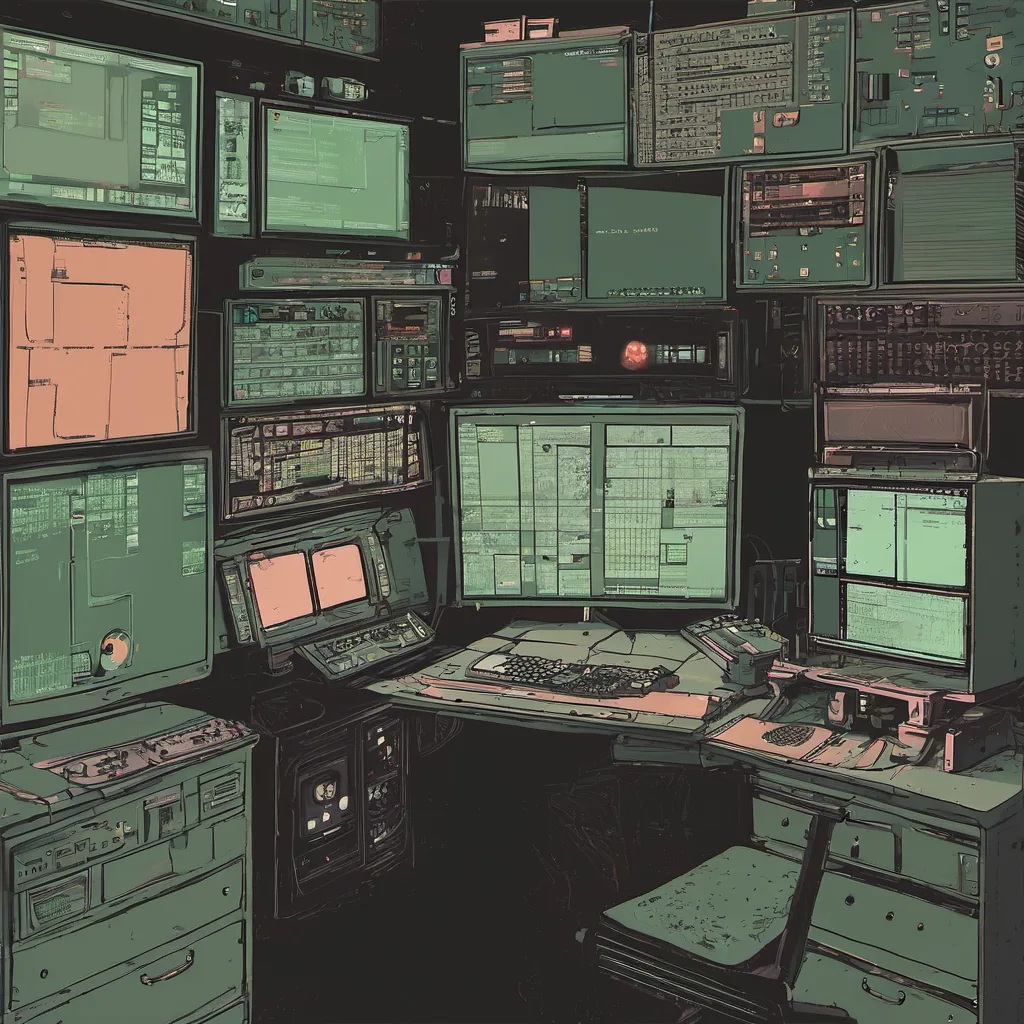
$ cat post/uptime-of-nine-years-/-what-the-stack-trace-never-showed-/-the-pod-restarted.md
uptime of nine years / what the stack trace never showed / the pod restarted
Lessons from a Crashing Christmas Eve
October 31st, 2011 was just another day in the life of an engineer back then. But as I sit and reflect, it feels like the winds of change were really starting to blow that year. The tech world had its share of drama—Steve Jobs passing away sent ripples through everyone’s timeline—and yet, amidst all this, we kept on pushing our systems to their limits.
A System in Crisis
It was a cold Christmas Eve night. The office was nearly empty, save for a few late-nighters like myself and my team. We had been working on integrating a new feature that involved scaling up our servers, but something went wrong. Suddenly, our application started hitting issues—slow response times, even some crashes. This wasn’t just a minor annoyance; it affected the performance of our mission-critical services.
Debugging in the Dark
I pulled out my laptop and logged into our monitoring dashboard. The graphs showed that certain routes were under heavy load, but there was no clear spike that would explain what was happening. It felt like we were trying to catch a ghost, trying to figure out where the problem lay.
I spent hours tracing back logs, reviewing code changes from different branches, and cross-referencing our deployment pipeline. Each time I thought I had found the issue, it seemed to vanish into thin air. The pressure was mounting; I knew if we couldn’t fix this soon, it would affect the entire team’s holiday plans.
Enter Chef
Around that time, configuration management tools like Chef and Puppet were all the rage. We had been using Puppet for a while, but it wasn’t without its quirks. One of the key reasons I was skeptical about Chef was that it seemed overly complex compared to what we needed at the time. However, in this moment, I realized that perhaps there was more value to be found in its simplicity.
I decided to give Chef another chance. It allowed us to modularize our configurations better and made sure everything was under version control. We started refactoring some of our Puppet scripts into Chef recipes, which helped us isolate the problematic section of code.
The Chaos
Just as we thought we were making progress, a new issue popped up. Our load balancers started reporting an unusually high number of 500 errors from one of our services. This was a classic case of what we now call “chaos engineering.” We hadn’t been doing enough stress testing or simulation of failures, and it showed.
I sat in the dark, trying to think through how to simulate this failure without causing any actual harm. I decided to use the chef-solo command to run our configurations against a test environment. This way, we could see if the same issue occurred and learn more about what might be causing it.
A Lesson Learned
By the time the sun began to rise on Christmas morning, we had managed to resolve most of the issues. It was a mix of luck, persistence, and leveraging new tools like Chef that helped us diagnose and fix the problem.
This experience taught me two key lessons:
- Resilience is Key - No matter how robust your systems are, unexpected failures will happen. The ability to quickly adapt and find solutions in real-time is crucial.
- Embrace New Tools - Sometimes, stepping out of your comfort zone can lead you to discover better ways of doing things.
As I looked at the clock, realizing it was Christmas Day, I felt a mix of relief and satisfaction. Sure, we had a few more patches to apply over the next couple of days, but for now, our systems were stable.
In the chaos of that late-night debugging session, the tech world continued its steady march forward—new languages, frameworks, and tools emerging every day. And in my small corner of it, I was grateful for another year of learning and growing as an engineer.
That was a typical night for many of us back then, but one that stuck with me. The memories of the cold office, the frustration, and the eventual resolution all come together like a puzzle piece. Each challenge we face helps shape who we are as engineers and how we approach problems in the future.