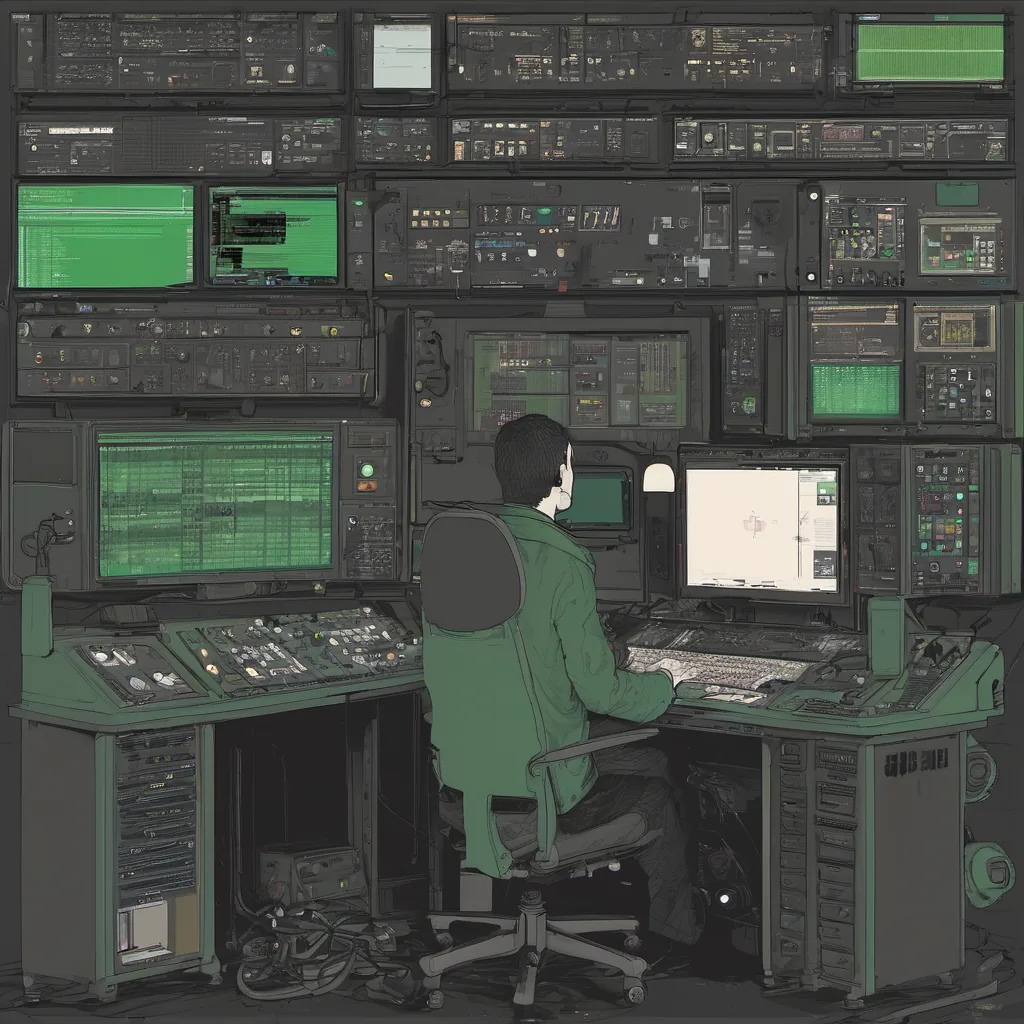
$ cat post/root-prompt-long-ago-/-the-secret-was-in-the-env-/-i-left-a-comment.md
root prompt long ago / the secret was in the env / I left a comment
Title: Debugging a Y2K Afterthought: A Linux Desktop at Year 2000
January 28, 2002. I remember the day like it was yesterday, or maybe it was last year when we finally got some semblance of normalcy back into our lives after the Y2K hysteria. I was a young engineer in a small startup that was still trying to find its footing in the post-dot-com bust era. Our company was struggling with growth and stability—typical stuff for any startup, but compounded by the reality that we were moving from Windows servers to Linux.
The transition had been a bit of a mess. We had our reasons: cost, security, flexibility, the list went on. But as with most transitions, there were always unexpected issues lurking in the shadows. One of these was on full display when I got an urgent call about one of our Linux desktops failing to boot.
It wasn’t supposed to be a big deal. We had been using Red Hat 6.2 for a while now, and everything seemed fine. But apparently, it didn’t like being run from a floppy disk. No, not just any floppy—our old trusty 1.44MB one that we thought was perfect for booting. Turns out, the kernel had trouble with its partition table or something. I couldn’t quite remember what the exact issue was, but it definitely wasn’t a fun debugging experience.
I rushed over to the server room, grabbing my laptop and a spare CD with the latest version of Red Hat. I started by trying to boot from CD, thinking maybe that would help avoid the floppy problem. But no luck there either. The system hung on startup, spewing cryptic messages about device drivers failing to load.
“Damn it,” I muttered under my breath. “What am I missing here?”
I sat down at a console and started poking around in the logs. It was a cold January day, and my fingers were soon numb from typing on the keyboard. I tried various commands, checked files, and ran diagnostics. Every time I thought I had it, something else would pop up.
After an hour of frustration, I decided to take a step back and try to think about what could possibly be causing this issue. That’s when I remembered the Y2K debates. Back in 1999, everyone was worried about how our servers would handle the year changeover. We had upgraded to Y2K-friendly versions of everything, but did we really test it on a floppy disk boot? Probably not.
I rebooted the system and this time, I took a look at the date and time settings in the BIOS. Sure enough, it was set to January 1st, 2003! The system thought it was already past Y2K. Panic started to creep in as I realized that our desktops were running way behind schedule.
I quickly adjusted the BIOS clock, hoping against hope that this would fix everything. After a reboot, things seemed okay for a moment. But then, just as I was about to breathe a sigh of relief, the system froze again, but this time with an error message that made perfect sense: “Invalid Kernel Image.”
So much for that idea. Back to square one. I spent another hour pouring over documentation and trying different configurations. Eventually, I stumbled upon the solution: the boot loader was looking for a kernel image in the wrong location.
It turns out, our upgrade from Red Hat 6.1 to 6.2 changed something about where the kernel expects to be found during boot. Once I adjusted that setting, the system booted up smoothly without any issues. Whew!
Reflecting on this experience, I realized how much we had learned over the past few years. While Y2K was a big deal back then, it also forced us to reassess our systems and make sure they were robust enough for real-world use. This little incident was just a small reminder that even after all these years, there’s always something new to learn.
In the end, I wrote up a detailed note about this issue and shared it with the team. It might seem trivial now, but at the time, it felt like an important lesson in system reliability and the need for thorough testing. That experience helped us become more resilient as a company, ready for whatever challenges lay ahead.
As I walked back to my desk, I couldn’t help but chuckle at how much has changed since 2002. Back then, we were still figuring out Linux on the desktop, and now, it’s hard to imagine doing anything else. But that’s a story for another day.