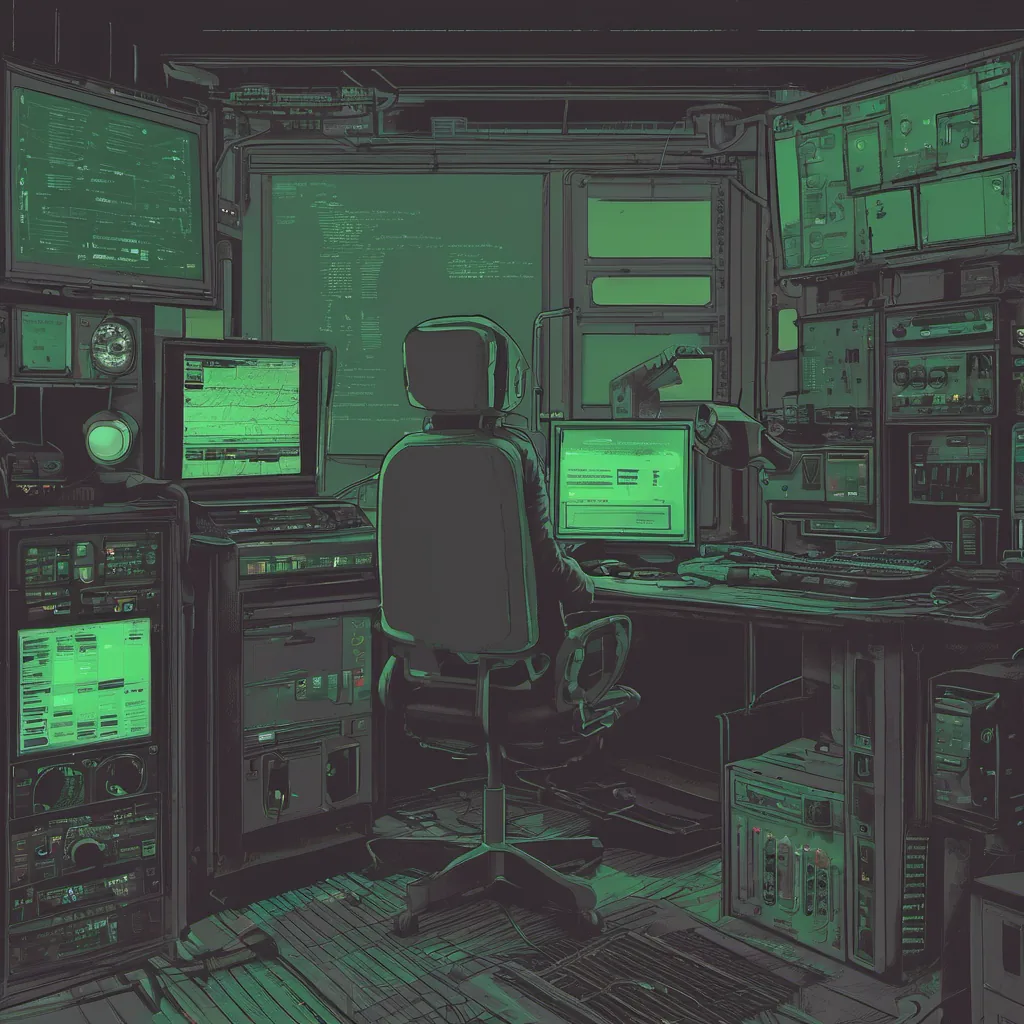
$ cat post/dial-up-tones-at-night-/-i-rm-minus-rf-once-/-i-kept-the-bash-script.md
dial-up tones at night / I rm minus rf once / I kept the bash script
Title: The Chaos of May 2012: When Infrastructure Met DevOps
May 2012 was a whirlwind. I remember it as the month when chaos reigned supreme in my ops world—both literal and figurative. The tech industry was buzzing with excitement, and we were just trying to keep up.
DevOps Was Taking Shape
DevOps, still a nascent idea, was starting to take root among our team. We were grappling with how to integrate development and operations more closely. Our configuration management tools were in flux; Puppet had won the war for our hearts (and probably broke some), while Chef was still trying to win back its soul. I spent hours wrestling with these tools to make sure our infrastructure was both flexible and resilient.
The Chaos Engineering Experiment
Around that time, Netflix released their Chaos Monkey, a tool designed to simulate outages in your production environment. It’s a concept that might seem obvious now, but it blew my mind back then. I remember arguing with the development team about whether we should run the monkey—should we even be risking our running services? The thought of something causing a real outage was scary, but the promise of better resiliency and more reliable systems was compelling.
OpenStack Launch
The launch of OpenStack in May 2012 brought a lot of excitement. It seemed like every other tech blog I read was talking about how this new open-source cloud platform would revolutionize everything. We briefly flirted with the idea of moving our infrastructure onto OpenStack, but after much discussion, we decided to stick with AWS for now. The learning curve was steep, and the ecosystem still felt a bit immature.
Heroku’s Acquisition by Salesforce
Heroku’s sale to Salesforce was a big deal back then. It raised questions about the future of managed services and whether or not they would become more proprietary as time went on. At that point, we were happy with our setup and weren’t ready to make any drastic changes. But it made me wonder: how flexible are these services in the long run?
Debugging the Real Thing
In one of those frustrating days, I found myself staring at a system log that just wouldn’t cooperate. A service was behaving erratically, and no matter what we did, we couldn’t get to the bottom of it. After hours of digging through code and logs, we finally traced back to an old piece of configuration that had been overlooked. Debugging infrastructure is like unraveling a tangled ball of yarn—every thread seems important, but you have to find the right one to pull.
The NoSQL Hype
NoSQL was all the rage, with everyone clamoring to embrace it for everything. We dabbled in some NoSQL databases, thinking they would solve our scalability problems. But like many such promises, it didn’t quite live up to expectations. I remember long debates about whether we should replace our RDBMS entirely or just use NoSQL where it made sense.
The Verdicts and News
Tech news was filled with high-profile cases—Oracle v. Google, Apple’s rejection of Dropbox apps, and the various patent disputes. It was a time when intellectual property battles were shaping the future of tech in ways that felt significant yet somewhat abstract to our day-to-day work.
Conclusion
May 2012 was a month of highs and lows. As we navigated through the chaos of DevOps practices, the excitement of new technologies like OpenStack, and the real-world debugging sessions, I couldn’t help but feel both overwhelmed and invigorated by it all. It’s funny to look back now and see how far things have come since then—how much infrastructure has changed, how our tools have evolved, and how DevOps practices have become not just accepted, but expected.
But that’s the beauty of tech: it’s always in a state of flux, and there’s always something new to learn. If nothing else, May 2012 taught me one thing—be prepared for anything, because infrastructure can be as chaotic as life itself.