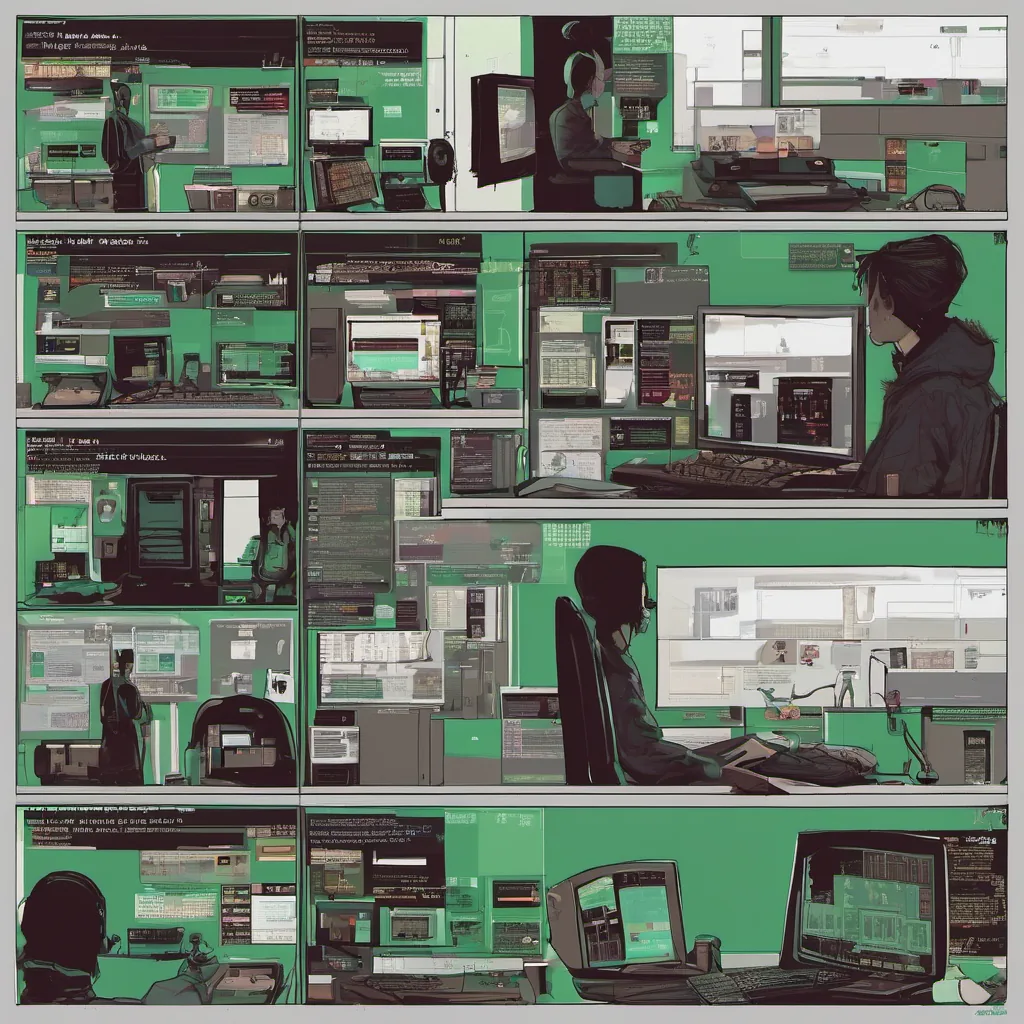
$ cat post/first-commit-pushed-live-/-a-grep-through-ten-years-of-logs-/-the-cron-still-fires.md
first commit pushed live / a grep through ten years of logs / the cron still fires
Title: March 4, 2024 - A Day in the Life of a Platform Engineer Amidst an Infrastructure Storm
Today, I woke up to another day filled with the humdrum of platform engineering. The dawn brought with it whispers of yet another AI-infused tool that promises to revolutionize our workflows—though truthfully, I have my doubts. The world outside is still grappling with LLaMA’s speed improvements on CPUs, and I couldn’t help but think about how these advancements will shape our infrastructure landscape.
Debugging the Backdoor
First up was a backdoor in an upstream xz/liblzma library that somehow managed to make its way into one of our production systems. It’s not often we face such direct threats, but when they do, it feels like the entire universe pauses just for you. The security team flagged it early, which is always reassuring. We quickly isolated the affected service and began tracing the backdoor.
The initial investigation led us to a complex series of function calls that were obfuscated enough to avoid detection for months. The culprit was a single line in a C function that executed arbitrary code based on certain environmental variables. It felt like playing an escape room, but with cryptic error messages and dead-end paths. By the end of the day, we had patched it, but not before we spent hours meticulously reviewing every piece of our codebase for similar backdoors.
FinOps and Cloud Cost Pressure
The morning’s debugging session gave way to a long discussion on FinOps. Our cloud bill is still high, despite using cost optimization tools like AWS Trusted Advisor. The DevOps team is pushing hard for more automation in their pipelines, but the finance team is worried about potential over-provisioning. We’re trying to find that sweet spot between cost and performance.
One of our platform engineers suggested using a new FinOps tool that integrates with our cloud provider’s API. It promises real-time visibility into costs and automatically adjusts resource allocation based on usage patterns. The idea was met with enthusiasm but also skepticism—skepticism born from past experiences where tools promised too much.
We’re currently running A/B tests to see if this new tool can really deliver the promised benefits without causing more harm than good. It’s a delicate balance, and I’m keeping my fingers crossed for positive results.
WebAssembly on Server Side
In the afternoon, we had an internal presentation on using WebAssembly (Wasm) in server-side applications. The talk was led by our platform architect who is deeply interested in leveraging Wasm to build microservices that are both performant and secure. The idea has some merit—Wasm could potentially reduce the attack surface of our services while offering better performance compared to traditional VMs or containers.
However, there’s a catch: Wasm is still quite new for server-side use cases. We’re exploring its feasibility by building a small proof-of-concept that uses Wasm to handle incoming HTTP requests and route them to different backends based on certain criteria. The team is excited about the potential, but I’m also cautious—there’s a long way to go before we can confidently move this into production.
DORA Metrics
As the day drew to a close, we had our weekly meeting to discuss DORA (DevOps Research and Assessment) metrics. Our pipeline deployment frequency was up by 10%, which is encouraging. But our mean time to recovery (MTTR) has been hovering around 24 hours, which is still higher than ideal.
We’re experimenting with more automated testing and CI/CD integrations to reduce MTTR. One idea I’ve been playing with is integrating chaos engineering into our pipeline. The thought of causing intentional failures in production environments makes me cringe a bit, but the potential benefits for improving resilience are undeniable.
Conclusion
As I wrap up my day, I reflect on the challenges and opportunities that lie ahead. AI infrastructure continues to evolve at breakneck speed, while FinOps remains a constant concern. Wasm holds promise but also introduces new complexities. And let’s not forget about those pesky backdoors—they’re always lurking.
The tech world is in a state of flux, and it’s exciting to be part of it. I’m looking forward to seeing what the next few weeks bring—whether it’s more debugging sessions or groundbreaking projects that push the boundaries of what we can do with technology.
Until next time,
Brandon Camenisch