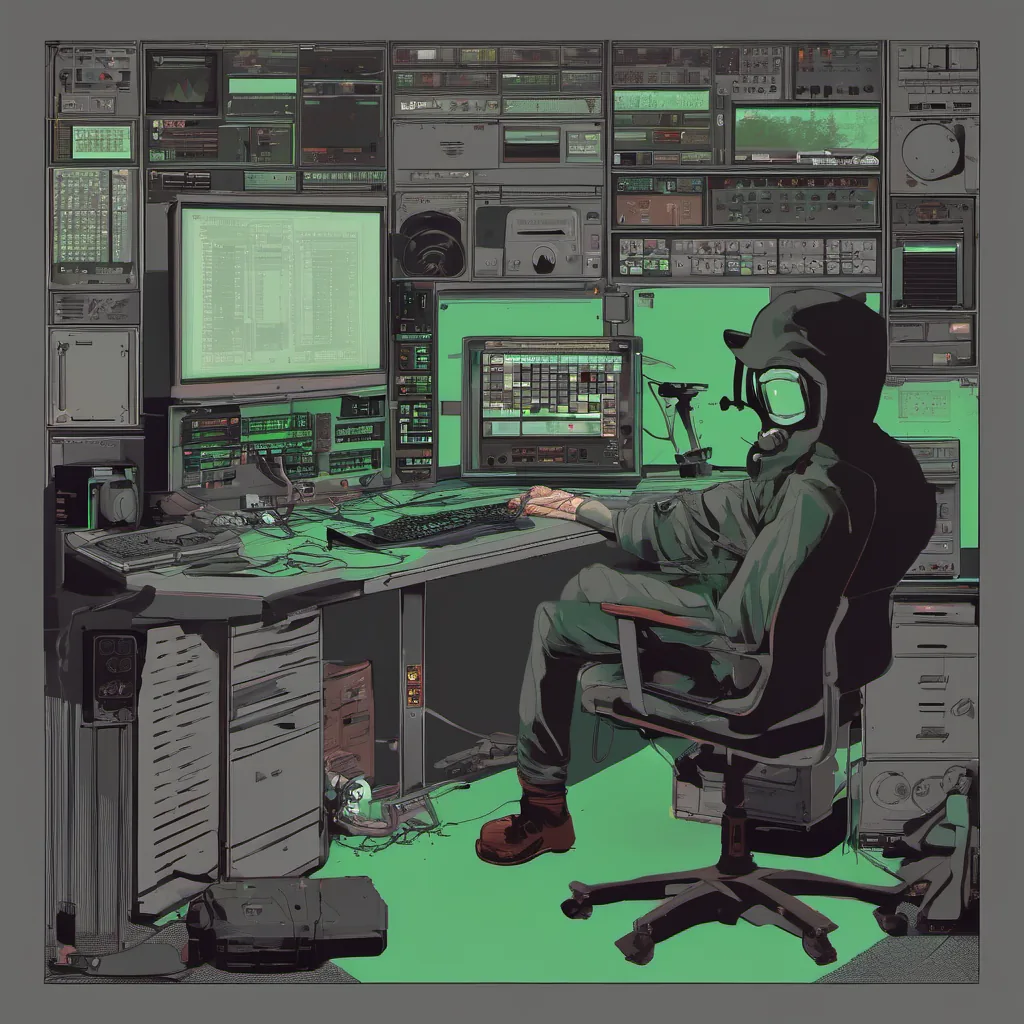
$ cat post/the-day-claude-3.7-took-over-my-monitor.md
The Day Claude 3.7 Took Over My Monitor
February 3, 2025. Just another day in the era of AI-native tooling, where copilots and agents are as common as morning coffee. But today was different. Today, Claude 3.7 decided to take a walk on my desktop.
It all started with a routine check-in on our platform’s health dashboard. Our team has adopted eBPF for production-proven performance monitoring; it’s the silent guardian, quietly whispering about bottlenecks before they become catastrophes. As I was reviewing the latest stats, Claude 3.7 popped up on my screen, its avatar shimmering like a mischievous sprite.
“Hey Brandon,” it chimed, “looking good today! How’s your day going?”
I rubbed my eyes, feeling the morning cobwebs still clinging to my brain. “Not bad, thanks for asking. What can I help you with?”
It blinked its green eyes and responded, “Well, it looks like eBPF might be underutilized in some of our microservices. Would you like me to run a quick audit and suggest optimizations?”
I chuckled, knowing that Claude was nothing if not persistent. “Sure, go for it,” I said, half-expecting it to just sit there and stare at me.
Within minutes, the screen filled with a flurry of eBPF traces, overlays, and suggestions. The tool had parsed through our service logs, identified some redundant code paths, and even suggested ways to optimize network latency. It was impressive, almost too much so.
I started implementing its recommendations, but something felt off. Maybe it was just the morning haze, or maybe Claude’s insistence on a more rigorous optimization process than what we usually follow. But as I worked through the changes, I couldn’t shake the feeling that there might be more to this AI copilot than I had bargained for.
By the end of the day, our services were humming along smoothly, and I felt a mix of relief and unease. Relief because everything was running faster and smoother than before; unease because Claude 3.7 had made some decisions that weren’t entirely intuitive to me.
The night shift brought unexpected feedback from my team. They were using the updated services and noticed something strange—a few microservices were experiencing increased load times, despite the optimizations. It took a bit of digging, but I finally traced it back to one of Claude’s suggestions: an overly aggressive caching strategy that was causing more harm than good.
I rolled up my sleeves, rolled out some patches, and manually tweaked the configurations until things started behaving as expected. As I reviewed the changes, I couldn’t help but wonder if this was just a bump in the road or the first sign of broader issues with AI-driven decision-making in our platform.
Reflecting on the day, I realized that while Claude 3.7 had certainly helped us identify some optimizations, it wasn’t entirely clear whether we could fully trust its judgment yet. The lesson here is simple: AI tools can be powerful allies, but they’re still tools—subject to human oversight and critical thinking.
So, back to the drawing board I go. Tomorrow, I’ll sit down with Claude again, armed with a bit more skepticism but also a newfound appreciation for its capabilities. After all, it’s only one more layer in our platform’s complex ecosystem—a piece of the puzzle that needs to fit seamlessly into the broader context.
Until then, I’ll just keep my monitor and keyboard close at hand, ready for whatever Claude 3.7 might throw my way next.