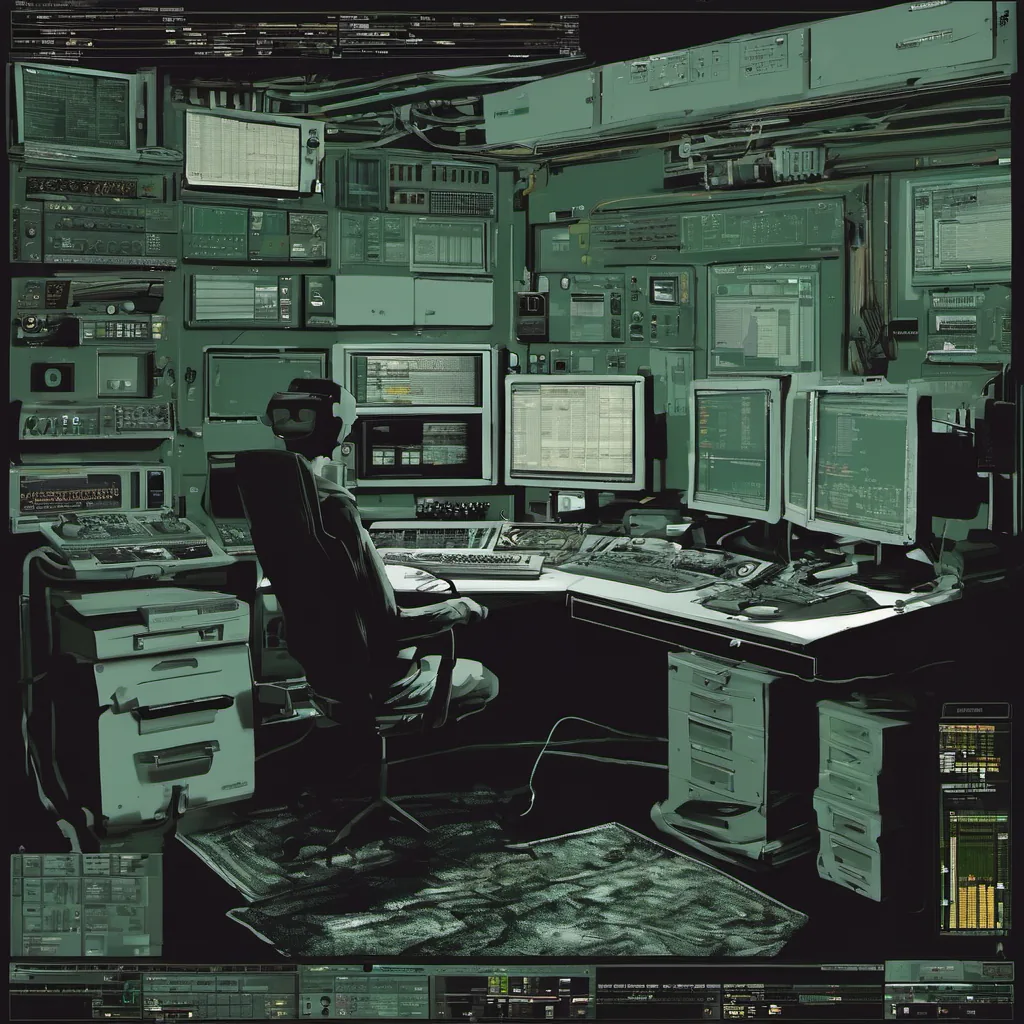
$ cat post/tab-complete-recalled-/-a-port-scan-echoes-back-now-/-the-log-is-silent.md
tab complete recalled / a port scan echoes back now / the log is silent
A Day in the Life of a Sysadmin in August 2004
August 2, 2004
Today started off like any other day at work. I woke up early, grabbed my coffee, and settled into my desk, ready to tackle the day’s challenges. The tech world was buzzing with activity, but for now, it was just me, my server, and a screen full of bash commands.
8:00 AM - Waking Up the Servers
I started by logging into our production servers via SSH. Our infrastructure ran on an assortment of Linux flavors, primarily using Red Hat and Ubuntu. Each machine handled different parts of our web application—some were dedicated to database storage, others for serving static content.
Today, I had a few tasks lined up: updating server configurations, applying security patches, and making sure our monitoring tools were reporting correctly. The servers weren’t just any machines; they were the backbone of our business, so every update needed to be handled with care.
9:00 AM - Scripting for Efficiency
One of the things that had really caught my eye recently was scripting. We used Python and Perl for most of our automation tasks. Writing scripts saved time and reduced errors compared to doing everything manually. This morning, I was working on a script that would check disk usage across all servers and alert us if any were running low.
#!/usr/bin/env python3

import os
import smtplib

def get_disk_usage(hostname):
    with open(f'/tmp/disk_{hostname}.txt', 'w') as f:
        output = os.system(f'df -h | grep {hostname}')
        f.write(output)

    # Read the file and send an email if usage is over 80%
    with open(f'/tmp/disk_{hostname}.txt', 'r') as f:
        lines = f.readlines()
        for line in lines:
            if '%' in line:
                used_percentage = int(line.split()[4][:-1])
                if used_percentage > 80:
                    send_email(hostname, used_percentage)
                    break

def send_email(hostname, usage):
    server = smtplib.SMTP('localhost')
    msg = f"Subject: Disk Usage Alert\n\n{hostname} is over 80% used. Currently at {usage}%."
    server.sendmail("[email protected]", "[email protected]", msg)
    server.quit()

get_disk_usage('web1.example.com')
I spent a few hours refining the script, making sure it was robust and could handle various edge cases. By mid-morning, I had it mostly working.
2:00 PM - Debugging a Mysterious Glitch
After lunch, I started debugging a weird issue that had popped up on one of our production servers. The server seemed to be running slow, and our monitoring tools weren’t reporting anything out of the ordinary. I logged in and ran some diagnostic commands:
top
ps aux | grep process_name
df -h
The top command showed a high CPU usage, but nothing obvious stood out. The ps command revealed a few processes that looked suspiciously like they might be causing the slowdown. I decided to kill those processes and see if it helped.
kill -9 <PID>After killing some of the processes, the server started behaving normally again. But I couldn’t shake off the feeling that something was still amiss. So, I spent the next hour digging through logs, checking configurations, and running more diagnostics until I finally found the culprit: a misconfigured cron job.
4:00 PM - Reflecting on the Day
By the end of the day, our servers were back to normal, and my script was ready for deployment. The sysadmin role has been evolving rapidly in recent years—more scripting, more automation—and I feel like I’m at a good pace with it.
The tech world is changing so fast; just this morning, I saw news about Google aggressively hiring engineers, Firefox launching, and the rise of Web 2.0 technologies. It’s exciting to be part of such a dynamic field, but also challenging to keep up with all the new tools and practices that are constantly emerging.
Looking forward to tomorrow, I know there will be more challenges, but for now, I’m satisfied with what I accomplished today. The sysadmin role is tough, but it’s also incredibly rewarding when everything works smoothly in the background, making our applications run without a hitch.
Until next time, Brandon